AIA Welcomes Dr Lisa Kemmerer as a new Patron

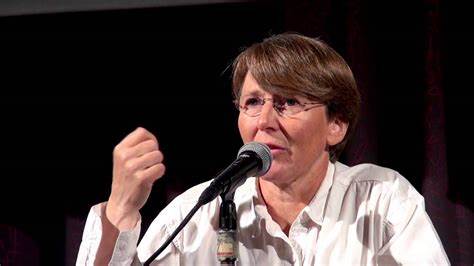
We are delighted to welcome Dr Lisa Kemmerer as a new AIA Patron. Lisa is a prolific writer of books on animals in religion and she created the ‘Animals in World Religions’ travelling exhibit.  Books by Lisa Kemmerer can be found here.

Lisa has a masters degree in Theological Studies in Comparative Religions (Harvard) and a PhD in Philosophy, specialising in animal ethics (Glasgow University, Scotland) and has taught for over 20 years at university level.  Her full biography can be read here.


AIA puts Animals on the Agenda of the PoWR

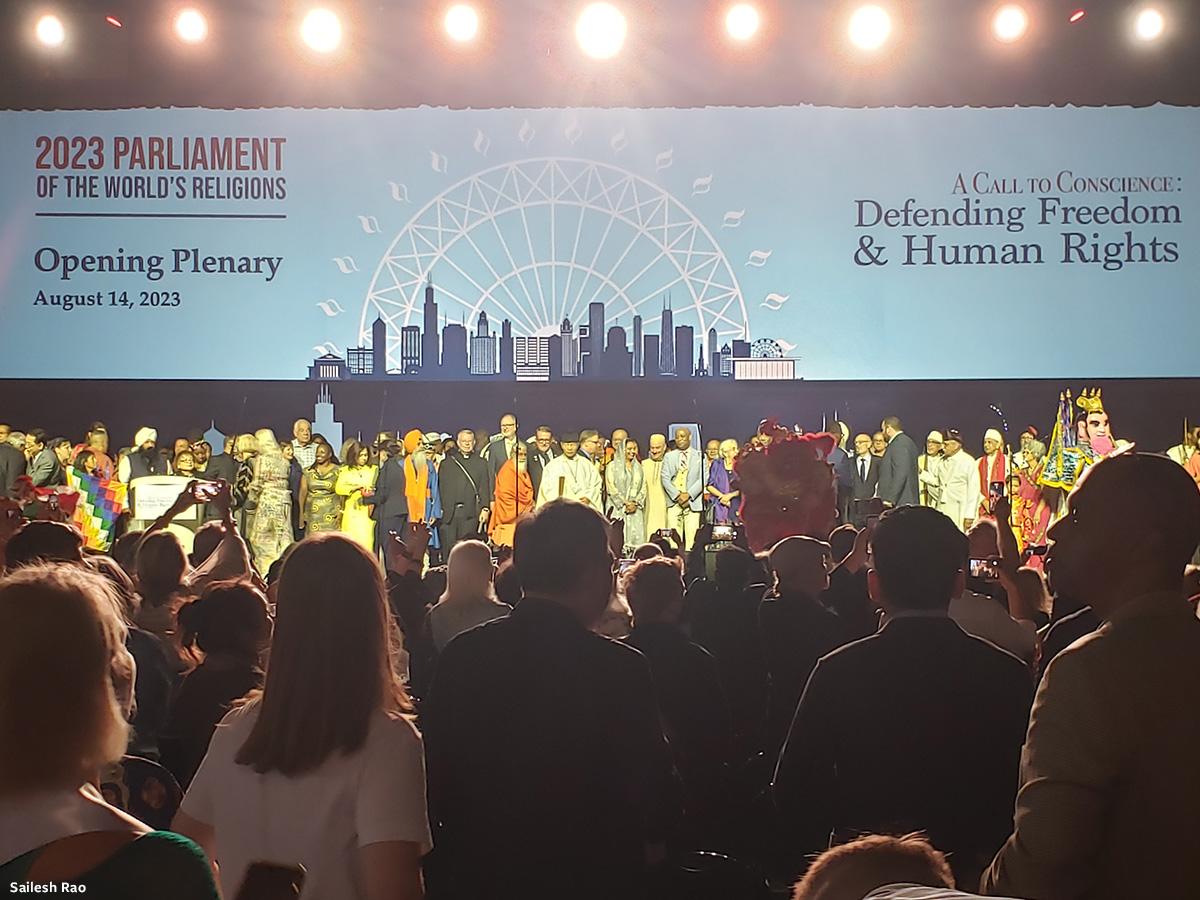
AIA presented at the 2023 Parliament of the World’s Religions (P0WR) which was held in Chicago on 14-18 August 2023. We worked with our U.S. colleagues the Interfaith Vegan Coalition and the Compassion Consortium to put animals and vegan spirituality on the agenda.

AIA held two events:

  1. A Panel Event:-  A Call to Conscience: Defending Freedom and the Rights of All Sentient Beings. The title of this panel was derived from the title of the PoWR this year, “A Call to Conscience: Defending Freedom and Human Rights“.
  2. A Religious Observance:-  An Interfaith Celebration for Animals

AIA’s CE, Barbara Gardner and Vice Chair, Chris Fegan also spoke on a number of other panels. Further information about the 2023 Parliament can be found here.

We are most grateful to the PoWR for putting animals on their agenda.

Further information about the 2023 Parliament can be found here.


Congratulations to STAE on Achieving New Legislation

Congratulations to Duncan McNair and all the team at Save The Asian Elephant (STAE) as their Animals (Low-Welfare Activities Abroad) Bill passed successfully through the House of Lords yesterday, without division or opposition (as in all stages in the Commons and the Lords). Royal Assent has been granted by the King.

Duncan McNair, CEO of STAE said:

Save The Asian Elephants and the millions who have supported our campaign hope the passing into law of the landmark Animals (Low-Welfare Activities Abroad) Bill will prove a momentous day for animals everywhere. The measures, resolutely implemented and enforced, will help protect endangered and vulnerable species across the world from extreme exploitation, harm and death in tourism. They will also save many lives of humans too, turned on by maddened elephants and other creatures provoked by torture.

Save The Asian Elephants is hugely appreciative of all who have supported our campaign for these changes, of our government, our Parliament across the party divide, the charity sector and the public. All must now set our hand to starting the transition from brutal and dangerous practices to ethical sanctuaries and wildlife reserves.

Britain can take pride in this world-first law and we must encourage the world to follow suit whilst time remains for so many beleaguered species, our brothers and sisters in nature.”


Obituary – Fr Simon Peter Nellist

We are extremely saddened to report the passing of our much loved patron Fr Simon Peter Nellist on 29th May 2023 after a short battle with cancer. Fr Simon was an Orthodox priest and co-founder and co-leader of our member organisation Pan-Orthodox Concern for Animals, along with his wife Dr Christina Nellist. A wonderful advocate for peace, Fr Simon gave so much to achieve a world where all animals are cherished and can flourish. His was a life well lived. We will miss him so much.

Fr Nellist had been Archpriest of the Orthodox diocese of Tanzania prior to his retirement. His Mission Centre was based in Kidamali, a small village on the Iringa plateau some 500 kms south west of Dar-es-Salaam and 40 kms from Iringa. The mission served 30+ villages in the area and was primarily child focused, providing a feeding programme, health care, education and clean water. Malnutrition is now rare in the mission area but the feeding programme still allows access to check the children’s general health and welfare. 

Fr Simon also occasionally served in Cyprus and was attached to the Archdiocese in England, serving in Welling and Maidstone in recent times. He had been a professional accountant in many countries before entering the priesthood and was Treasurer of Pan Orthodox Concern for Animals.

He was actively involved in his local RSPCA, was their Treasurer for many years, and assisted with helping to rehabilitate the cruelty cases that came into the local branch.

Fr Simon leaves behind his wife Dr Christina Nellist, two sons, Mark and Dean, and two grandchildren, Alexander and Amelia. Our thoughts and prayers are with them. We have lost a great patron and we shall always be so grateful for the wonderful support he gave us.


Animal Welfare in World Religion by Joyce D’Silva

Book Review

Review by Barbara Gardner

In her new book, Animal Welfare in World Religion: Teaching and Practice, Joyce D’Silva examines what the five major faiths, in terms of their numbers of followers – Judaism, Christianity, Islam, Hinduism and Buddhism – and other world traditions say about our relationship with animals, and how our treatment of animals compares to their teachings.

Joyce points out the huge anomaly that over 80% of the world’s population claim to belong to a faith and that these faiths teach that all animals should be treated with respect and kindness, some saying that the divine dwells within all animals.  And yet, humans are responsible for huge amounts of animal suffering, in entertainment and laboratories, for example, but particularly in farming where 80 billion land-based animals and between half a billion to one billion farmed fish are raised and slaughtered every year for our consumption, most in cruel factory farm systems. In addition, there are over a trillion wild-caught fish consumed by us every year.  How can humans reconcile their practices with the teachings of the faiths they claim to adhere to?  Joyce takes up this challenge.

Joyce is particularly well placed to do this.  She is a former Chief Executive of Compassion in World Farming, the leading farm animal welfare campaign group in the world, and is now its Ambassador Emeritus.  She has been awarded honorary doctorates from the University of Winchester and the University of Keele, and is the author of many books on animal welfare.  She is a patron of the Animal Interfaith Alliance.  Many authors have written about what their faith says about animal welfare and some have written books about what each faith says about animal welfare (see Books – Faith & Animals – Animal Interfaith Alliance (animal-interfaith-alliance.com)).  What is unique about Joyce’s book is that she examines modern practices in our treatment of animals – in farming methods, wildlife and biodiversity, hunting and sport, caring for animals, diet and eating animals, slaughter and vivisection –  and compares them with the teachings of the world’s faiths.

Joyce examines why there is such a huge discrepancy between what the faiths teach about animals and how the followers of those faiths treat them today. This discrepancy is caused partly because people ignore or are ignorant of the teachings of their faiths, preferring to continue the practices handed down to them, rather than referring to the original texts and practising their teachings.  And it is partly because the literature of the faiths themselves are inconsistent, with texts having been built up over millennia by different people from different places and cultures.  Take Christianity, for example.  Not only were the books of the Old Testament written by many different people over many decades with many different views, but post Christian interpretation of the teachings have been varied and often contradictory.  The main books were selected by the Council of Nicaea in the fourth century AD to form the New Testament, but there were many other texts that were excluded, so we do not see the full reports on the life of Jesus in the New Testament.  Then, when it comes to animals we have two schools of thought. Firstly, there are the examples of the lives of the Saints, who lived with and protected animals, with their ‘Franciscan’ view of a sisterhood and brotherhood with the animals and the natural world, and secondly there is the ‘Aristotlean-Thomistic’ view which says that man is superior to other animals, as man has reason and a soul which animals do not have, and that animals are there for our use.  Today we have very unclear and opposing views in Christianity concerning our relationship with animals.  Unfortunately for the animals, the Aristotlean-Thomistic view has become dominant. These same contradictory views can be seen in Judaism and Islam for the same reasons, with some sections based on the lives of the saints and mystics, who practice kindness to animals and vegetarianism, and other orthodox sections who, for example, argue for slaughter without stunning.  In Hinduism we see sections who carry out mass sacrifices, such as in the Gadhimai festival in Nepal, and others who practice ahimsa and vegetarianism.  Our faiths have, in truth, offered us total confusion.  Probably the only example of a faith which is clear about how we should treat animals is the beautiful and ancient Jain faith, which promotes ahimsa that says that no animals should be harmed, so they do not farm, slaughter, eat or use them in any way.

But despite this, as Joyce points out, all faiths have wonderful teachings about how we should treat animals with respect and kindness, even if we are not prohibited from using them for food and other uses.  Joyce refers to these teachings in her book and provides important references for all faith practitioners.  I would strongly recommend that people read the book and become familiar with these references.

This is a modern book, which not only looks at the ancient teachings and practices of the faiths, but looks at the views of very modern theologians who are living in today’s world of mass animal cruelty, that the writers of the ancient texts could not have imagined.  Could the writers of the prescriptions on the most humane way to slaughter an animal for food in an ancient desert wilderness have had any comprehension of the factory farm of the 21st century?  Their prescriptions could have been very different if they had.  Joyce brings in the views of today’s modern theologians who can apply their faiths to today’s world – and she describes that world very thoroughly. 

But away from all the teachings and the dogma, I leave you with a quote from Saint Isaac the Syrian (613-700 AD) who, for me, sums up what faith is about – compassion: “What is a merciful heart? It is a heart on fire for the whole of creation, for humanity, for the birds, for the animals… and for all that exists.  By the recollection of them the eyes of a merciful person pours forth tears in abundance.  By the strong and vehement mercy that grips such a person’s heart, and by such great compassion, the heart is humbled and one cannot bear to hear or to see any injury or slight sorrow in any in creation”.
Happy Earth Day!

Photo by NASA on Unsplash

Today, Saturday 22nd April, is Earth Day and AIA is celebrating our precious planet and all it’s life.  In particular on Earth Day, we are caring for our Common Home by extending the Golden Rule to the Planet and all animals. 

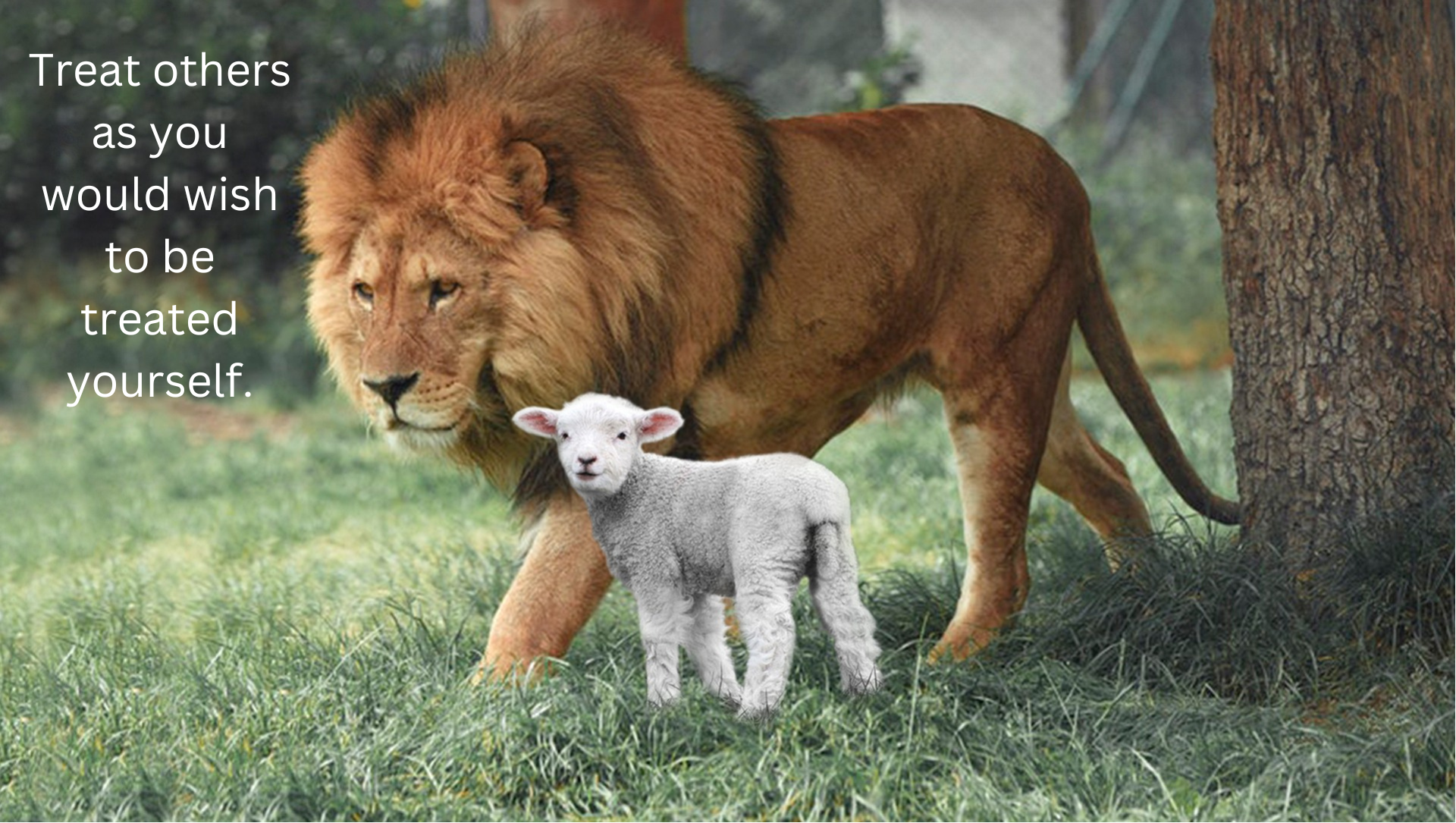
We have partnered with the Charter for Compassion for their Compassion for All Animals Project.  We share the Charter for Compassion’s definition of the Golden Rule, “Treat Others and the Planet as You would wish to be treated” and we include all sentient beings in those ‘Others’

The best way to protect the planet, its environment and climate, as well as including animals in our circle of compassion, is to adopt a plant-based diet.


Spend An Evening with Peter Singer

Spend and evening with Peter Singer at the Hackney Empire, London on Sunday 4th June 2023 as he talks about his new book Animal Liberation Now.

‘Peter Singer: Animal Liberation Now’

Get ready for a thought-provoking conversation with the legendary philosopher and ethicist, @PeterSinger, as he visits the UK for a one-night-only show.

 London | 4 June @ Hackney Empire

Delve into Professor Singer’s latest book “Animal Liberation Now,” as well as his thoughts on effective altruism and global poverty reduction.

Don’t miss this unique chance to engage with a true intellectual powerhouse and find inspiration for tackling the ethical challenges that define our era. All tickets come with a copy of Professor Singer’s new book, Animal Liberation Now, and all of the show proceeds will be donated to effective animal charities.

Secure your spot TODAY!

Visit www.thinkinc.live/singer for tickets and join us on this journey to explore ground-breaking solutions to today’s ethical questions.


RIP Envoye Special, Dark Raven and Hill Sixteen

Photo by Anastasiia Krutota on Unsplash

We remember with great sadness, in our thoughts and prayers, the three horses who died at this year’s Grand National events – Envoye Special, Dark Raven and Hill Sixteen.

No horse should die in the racing industry. No horse should be sent to a race event, never to return home. No horse should be made to participate in a potentially lethal event. It happens every year. The races must be made safe.

This is just not acceptable.

Goodbye and Rest in Peace Envoye Special, Dark Raven and Hill Sixteen.


Golden Rule Day 2023 – Join Us


Join us for a Panel Discussion on

The Golden Rule and Compassion for All Animals

5th April 2023
11.00am PST, 7.00pm BST
on Zoom

We’re delighted to be joining our partner the Interfaith Vegan Coalition on a zoom panel for the Charter for Compassion’s Golden Rule Day, on Wednesday 5th April, to discuss “The Golden Rule and Compassion for All Animals”.

Register Here

Our panel is one of six different offerings for the Golden Rule Day celebrations, details of which can be read here.

Our panel will include speakers from the following organisations:

Speaker Details: 
Speaker Bios 
Speaker Photos