ASWA Animal Welfare Service

On Animal Welfare Sunday, the Anglican Society for the Welfare of Animals (ASWA) held their annual animal service at Newport Cathedral.  Here, ASWA President, Rt Revd Dominic Walker OGS (former Bishop of Monmouth) gave the following sermon:

ASWA Service – Newport Cathedral

I don’t suppose the name of Jack Swart will be known to many of you, but Jack Swart was a South African prison guard who worked at the prison on Robbin Island, off the coast of Cape Town. Robbin Island was used as a prison to house many who opposed apartheid and were deemed to be terrorists and enemies of the State. Among the prisoners that Jack Swart guarded was one, Nelson Mandela. As far as Jack was concerned, Mandela was just another dangerous prisoner and trouble maker. For him, being a prison guard was just a job and he wasn’t interested in the prisoners as people and had certainly never listened to their stories.

But all that changed in 1988, when Jack was assigned to cook for Mandela. He saw it as something of a demotion but in the two years that they were together, something happened. The change was so profound that Jack Swart and Nelson Mandela became close friends and Mandela joked that people only came to see him because the meals were so good. Jack came to describe Nelson Mandela as his brother and was proud to be photographed with him.

I tell you this story because the readings today are about relationships and how we sometimes fail to reverence one another as brothers and sisters of the same heavenly Father. In the Epistle, St Paul describes his Jewish background and how he regarded Christians – in fact, he regarded them not unlike Jack Swart regarded the prisoners on Robbin Island – they were inferior because they belonged to a different group. And the Gospel reading shows how the wicked tenants regarded the landlord’s servants – the tenants were so preoccupied with self interest that they did not regard the landlord’s servants or even his son as deserving respect and reverence as fellow human beings.

And yet, and yet, the Christian faith is all about relationships. At the heart of our faith is the belief in the Holy Trinity – Father, Son and Holy Spirit bound together in a dynamic unity of love. Much of the teaching in the Bible is about how to have a right relationship with God, with one another and with creation.

At this Eucharist we shall follow the ancient custom of sharing the Peace with one another because if we cannot recognise Christ in one another, we don’t have a chance of recognising the risen Christ in the consecrated bread and wine. But it is not just a matter of recognising God’s presence in one another, we also need to recognise his presence in all his creation for ‘God so loved the world’ – the cosmos – and not just human beings. At this time of year, the Church celebrates the Feast of St Francis of Assisi who is remembered for his love for the poor and for animals and all creation.

This is also the time of year when many churches celebrate Harvest Festival, but I have lost count of the number of Harvest Festival services I have attended where the congregation has been invited to thank God for the farmers and the fruits of the earth but animals are never mentioned – not even at Harvest Festival let alone in the prayers on ordinary Sundays throughout the year – and yet Jesus teaches us that not one sparrow falls to the ground without his heavenly Father’s knowledge.

About 20 years ago, I was asked to be chairman of the ASWA – I was told that there was a young, new enthusiastic secretary and a new treasurer and a recent legacy would help to make the Society better known among Anglicans. I was told that its mission was to put animals on the Church’s agenda because they had been sadly neglected. Thanks to the amazing work and dedication of others, the ASWA has grown and grown and now produces publications, speakers and events to encourage Christians to have a proper relationship with the environment and in particular with other sentient beings – God’s animals.

But there is still a long way to go. It is fine to have pet blessing services and to give thanks for companion animals, although I am always cautious of small boys who come up with cardboard boxes with air holes and which might contain a pet snake or a tropical spider. Companion animals are a great blessing to many and are usually treated with kindness – but so much suffering takes place elsewhere where animals are intensively ‘factory farmed’ in unnatural environments and out of sight, where animals are transported huge distances in cramped conditions, where animals are used in laboratory experiments or where wild animals are used to entertain human beings.

I said that the Christian faith is about relationships – our relationship with God, with one another and with all creation, and of course they are interlinked. The Book of Genesis reminds us that we are stewards of creation and yet we often abuse that trust and let God down – and at the same time we put our own survival at risk.

Did you know that half of all antibiotics used worldwide are routinely given to industrially farmed animals which scientists warn us is contributing to the emergence of deadly antibiotic resistant superbugs.

Did you know that the use of chemicals in some parts of the world have destroyed the bee population needed to pollinate fruit trees? Bees are having to be trucked across the United States and air freighted from Australia to replace the bees that have been killed in the vast orchards of California.

Did you know that cereals that could feed billions of people are being given to animals – soya and grain that could nourish the world’s poorest people is grown as animal fodder.

The increasing demand for meat from countries like India and China cannot be met without enormous animal cruelty and even in this country people often pay more for bottled water than for milk and it costs the farmers more to produce it than they can sell it for.

So what as Christians can we do about this? You can of course join the ASWA and be kept informed of animal welfare issues and you can join in the debates and protests – write letters to MPs and others – but there is also another way.

As I often say, each time we go shopping we make moral choices by what we buy. So much food that is produced will have exploited poor people or animals. If you choose ‘Fair Trade’ alternatives you are helping poor people, not by paying a little extra as some kind of charity, but by giving them justice and a fair price for their goods.

Similarly, when it comes to animal welfare you have choices. Many people are choosing to eat less meat – either for reasons of health, cost or animal welfare. Some are choosing to eat less meat but better meat. And if you do buy meat, the RSPCA monitors the Freedom Food scheme to assure us of higher standards of animal welfare.

You can choose organic milk, free range eggs and free range chickens that are likely to taste very much better than those that are slaughtered at just six weeks old. Wild salmon has up to 60% less fat than farmed salmon, and buy local – most supermarkets now sell locally produced products and that helps the environment and local farmers.

Anglicans are committed to the Five Marks of Mission and from time to time we need to be reminded of what they are! They are – 1. To proclaim the good news of the Kingdom, 2. To teach, baptise and nurture new believers, 3. To respond to human need by loving service, 4. To seek to transform the unjust structures of society, to challenge violence of every kind and to pursue peace and reconciliation and, last but not least, 5. To strive to safeguard the integrity of creation and sustain and renew the life of the earth. 

So following the example of St Francis, let us give thanks to God for all his creatures with which we share this planet. Let us pray for forgiveness for the ways in which we have misused and abused our world – especially the animals and let each one of us all do something, no matter how small, because together we can make a big difference.

Amen.

The Real Meaning of Bakr Eid

By Faizan Jaleel

Goat

His family was fond of animals, and they always had dogs and cats, Faizan Jaleel recalls of his childhood, growing up in Rampur, Uttar Pradesh, around 150 miles (200 kilometers) to the west of Delhi.

Then, for six years, Faizan Jaleel, worked with the dairy industry.  In the beginning, his aims were idealistic.  He was striving to help poor farmers to increase the productivity of their animals, so that they and their families could have a better quality of life.  However, the more time he spent in this work, the more he became aware of the cruelty to animals that was involved in the dairy industry.  A devout Moslem, he felt that surely this was not what God wanted him to do.  Finally he quit, he stopped drinking milk and became a vegan.  He lives in Ghaziabad (Delhi NCR), with his cat and four rescued street dogs.

Working with the Brooke, a charity devoted to helping equines throughout the world, he is the Program Development Manager for 12 Brooke Centres in India.

As a dedicated animal advocate, Faizan Jaleel spends much of his time encouraging his fellow Moslems to take a deeper look at the inhumane practice of animal sacrifice.

His message is that many Moslems have misunderstood the teachings of Islam; Allah, revered as “the Merciful and Compassionate” is opposed to cruelty to animals.  There is no requirement for animal sacrifice in Islam.


Bakr Eid and Ibrahim’s sacrifice

On October 5 and 6, 2014, Moslems around the world will celebrate Bakr Eid.  This holiday commemorates the offering by Ibrahim of his son Ishmail to Allah.

In the Koran, it is stated that a miracle took place, and just as Ibrahim was killing his own son as a sacrifice to God, the boy Ishmael was transformed into a ram.  Ibrahim had not killed his son, but had killed a ram instead.  Mr. Jaleel says that this is spoken of in the Koran, therefore it is not a myth; it was a real event.  However, it has been taken out of its historical context and has been misunderstood.

The story of Ibrahim sacrificing the ram is used today by many Moslems as a justification for animal sacrifice on the holiday of Bakr Eid.

Faizan explains that people in those days used to live in the deserts of the Middle East, where there is very little vegetation.  It wasn’t possible to grow vegetables in the desert sands or to be a vegetarian; if they wished to survive they had to eat meat.

In those days in that region of the world, killing animals for food was a necessity that could not be avoided.  The animal that Ibrahim killed was used for food.  However, this is no longer the situation today.

The essential truth to be gained from this story is that Allah does require a sacrifice – but not that he requires that an animal be killed, which is no longer appropriate.


What kind of sacrifice?

The meaning of the sacrifice to Allah is not that it should be an animal, but rather that the sacrifice should be something that is very dear to the person – just as Ibrahim’s son was very dear to him. “The idea is to sacrifice the most beloved thing – that is the real purpose of the sacrifice. T he sacrifice must be close to our heart.”

He explains that, these days, a sacrificial animal is not at all dear to the person who is performing the sacrifice.  Either a person buys the animal the day before, or more likely, simply pays for an animal to be sacrificed in his name.  This isn’t a real sacrifice at all.  These people don’t care for the life of that animal, so it is meaningless.  It is a cruel and inhumane act, which causes suffering, and it is not a real sacrifice, so it makes no sense.

Slaughter of animals for Bakr Eid is widespread throughout the world, including throughout India. In Chennai, in Tamil Nadu, it has recently be made illegal to slaughter animals in the street.  They can be slaughtered only in a licensed slaughterhouse, which will greatly curtail the numbers that are slaughtered for Bakr Eid. 

In Andhra Pradesh, many camels are still slaughtered as part of this celebration.  In Delhi, where Mr. Jaleel lives, it is generally goats and buffaloes that are killed, not camels, and this is legal only in licensed slaughterhouses.  It seldom happens in the streets.  Though occasionally, in ghettoes where there is a majority Moslem population, it may occur.


Speaking out

Mr. Jaleel says that there are many Moslems who find this practice of animal sacrifice repugnant.  Often they do not participate, but he calls on them to do much more than that.  They must speak out against this inhumane custom to their friends and families.

He makes the point that animal sacrifice is not only done by Moslems; it takes place in other religions too, and one must oppose all animal sacrifice, not just that practiced by Moslems.

And so what is the best way for Moslems to observe Bakr Eid?  Mr. Jaleel suggests that each person offer something that is important or that has value.  Often, this may be money or resources.  One may give a donation to a charity, and this gift will be of real benefit to society.  By helping human beings or animals, it will be a genuine, positive sacrifice.

Is he making headway with his message?  He admits that the going is slow.  The custom of animal sacrifice “has been ingrained for many generations, so the pace of change is very slow.”  Sometimes it takes many discussions with a person before they begin to understand.  More open and more educated Moslems are more amenable to change.  It is a big issue that needs a strategic approach.  He gets a lot of help from individuals who are working towards the same goal.

Patiently and faithfully, he keeps going with his mission of spreading the word that God is compassionate towards both people and animals – and that Moslems are called to give a meaningful sacrifice to God, from the heart — not a sacrifice that harms animals.


If you’d be interested in volunteering to help with this outreach or if you’d like to contact Faizan Jaleel, he’d love to hear from you. He can be reached by email at faizanjaleel@icloud.com

To visit Faizan Jaleel’s blog, click here. http://faizanjaleel.wordpress.com/

Photo: © Tsiumpa / Dreamstime.com


11th Interfaith Celebration for Animals

Interfaith CelebrationsAnimal Interfaith Alliance Chair, Rev, Feargus O’Connor, has been holding Interfaith Celebrations for Animals at this Unitarian Church in Golders Green for 10 years, to celebrate World Animal Day (WAD), also the birthday of St Francis of Assisi, the Patron Saint of Animals.  On Saturday 4th October 2014 he held the 11th Interfaith Celebrations for Animals, which was sponsored by The World Congress of Faiths, The Animal Interfaith Alliance and Quaker Concern for Animals.

ORDER OF SERVICE

Words of Welcome from Rev. Feargus O’Connor.

Lighting a candle for the world’s animals and special candles for the Animal Interfaith Alliance, all animal protection campaigners and for polar bears and other victims of global warming.

–

Hymn – Reverence for Life (John Andrew Storey)

Universalist Prayer for Animals – Rev. Feargus O’Connor

–

Readings:

Buddhist

Hindu

Jain

Sikh

–

Address by Barbara Gardner, director of The Animal Interfaith Alliance

Prayer or Companion Animals fondly remembered

–

Readings:

Christian

Jewish

Muslim

Quaker

Unitarian

–

Address by Dr Alpesh Patel of the Dr Hadwen Trust

Hymn – We Celebrate the Wen of Life (Alicia S. Carpenter)

–

Keynote Address by Dr Richard D. Ryder (AIA Patron)

–

Voluntary collection for the Dr Hadwen Trust and the Animal Interfaith Alliance

Sung Affirmation

Barbara Gardner on Radio 4 – Mar 2013

AIA Managing Director, Barbara Gardner discusses Religion and Animals on BBC Radio 4’s Beyond Belief programme with Shaunaka Rishi Das, a Vaisnav priest from the Oxford Centre of Hindu Studies and Shimon Cohen, Director of Shechita UK, an organisation which defends the Jewish method of slaughtering animals for food – 4th March 2013.

http://www.bbc.co.uk/programmes/b01r0dyv

Barbara Gardner

Dr Andre Menache Speaks at London Vegan Festival – Aug 2014

On 17th August 2014, AIA board member and AVC’s Scientific Consultant Dr Andre Menache BSc (Hons) BVSC MRCVS – delivered a brilliant talk around the link between curiosity-driven research, Universities and public funding.

Andre Menache

The general public continues to tolerate animal experiments, thinking that they are life saving. However, based on Home Office statistics, nearly three quarters of all animals used in 2013 were for ‘basic research’ (also known as ‘curiosity driven research’).

Basic research is experimental or theoretical work undertaken primarily to acquire new knowledge of the underlying foundations of phenomena and observable facts, WITHOUT ANY PARTICULAR APPLICATION OR USE IN VIEW.

Researchers are quick to suggest that their basic research on animals may one day provide a cure for this or that human disease. However, the weight of scientific evidence clearly shows that the chances of this happening are almost zero, so all this money spent on basic research using animals would be better spent elsewhere on REAL science.

When the public is asked for its opinion on basic research using animals, the response is a resounding NO. In the largest survey of its kind, the European Commission found that 70 per cent of EU citizens are opposed to basic research using animals. And here’s the crazy part: we are funding it through our taxes even though most of us consider it to be cruel and useless.

AVC website: StopVivisection.org.uk Facebook: Facebook.com/AntiVivisectionCoalition Dr Menache is contactable via info@StopVivisection.org.uk Read more about Dr Menache’s work: AnimalConsultants.org/andre-menache.html

See the video of Andre’s talk here: – http://vimeo.com/104386197


Dr Richard Ryder on Radio 4 – Aug 2014

On 27th and 30th August 2014, AIA Patron Dr Richard D. Ryder debated on Radio 4’s Agree to Differ programme with vivisectionist Dr Tipu Aziz about the ethics of vivisection. What was surprising was the extent to which they agreed to agree!

The full debate can be heard on the BBC iPlayer at:-

http://www.bbc.co.uk/programmes/b04fc70m

Dr Richard D Ryder


Mahaveer Award – March 2014

Each year, the Young Indian Vegetarians present the Mahaveer Award to a person or group who has done something outstanding for animals. On 23 March 2014, they presented the Mahaveer Award to SPEAK for ten long years of campaigning for animals abused at Oxford University and to stop the cruel practice of vivisection. Nitin Mehta said to them, ‘Generations to come will remember your compassion to end cruelty inflicted on thousands of animals’.

He also said, ‘A day will soon come when this evil practice will end and, at that time, it is the compassion and commitment of SPEAK supporters that will be remembered with pride.’

Mahaveer Award Speak

‘Unless we live with non-violence and reverence for all living beings in our heart, all our humaneness and acts of goodness, all our vows, virtues and knowledge, all our practices to give up greed and acquisitiveness are meaningless and useless’

Mahavira


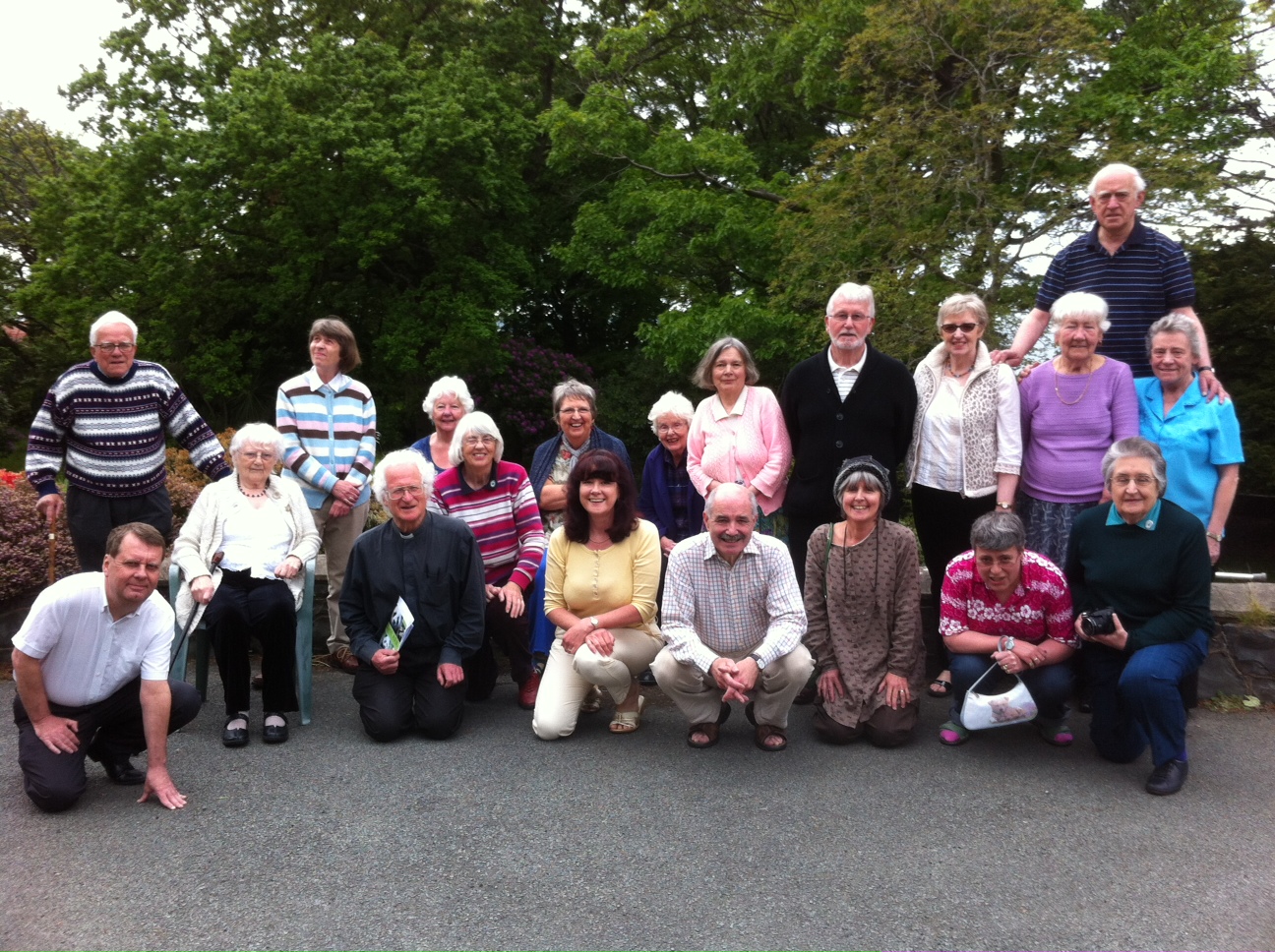
Ecumenical Retreat in Noddfa – May 2014

CATHOLIC CONCERN FOR ANIMALS ECUMENCIAL RETREAT, NODDFA – 12-15 MAY 2014

BY FIONA ROSEN

(First published in The Ark edition 228 and reprinted here with kind permission.)


HAVING NOT ATTENDED the annual CCA retreat for a couple of years, I was looking forward to my trip to the Noddfa retreat house in Penmaenmaur, North Wales. I was told I would have to tell the guard that I wanted the train to stop at Penmaenmaur station as it was a ‘request stop’. I realised then that this would be a trip full of new and interesting experiences!

Retreat 2

A Place of Welcome and Peace

Very relieved that the train had actually stopped (I was not, in fact, the only passenger alighting), I was met at the station by Sister Patrice and driven up the hill to Noddfa. The retreat centre is in a beautiful spot surrounded by mountains and with views of the sea. The word ‘Noddfa’ means haven or refuge, a place of welcome and peace, and as soon as you enter the driveway the peace enfolds you. The grounds are beautiful and extensive with wooded glades and paths, and you can experience one of the two Labyrinths and the Cosmic Walk. Apart from the beauty of the village down the hill and the surrounding countryside, you could happily spend all your time just sitting in the peace and stillness of the grounds.

One Big, Happy Family

But we were not just there for peace and stillness. There was noise and excitement as people began to arrive and greet one another on Monday afternoon. After a delicious supper served by the Sisters (and the rest of the meals were to be just as good) we had a good introductory session where we all said something about ourselves and one principal concern for animal welfare which we wished to bring forward.

Although I had not seen some people for a while, and there were others I had not met before, we were soon all one big, happy family again, united in our passion for animals and looking forward to an inspiring time ahead. We finished with Night Prayers in the chapel, a lovely place where we would be spending plenty of time over the next few days.

Prayers and Talks

Tuesday began with Morning Prayers and a spot of gentle exercise to get us ready for the day, saying the Lord’s Prayer with arm actions! Our first talk was given by a good friend of CCA, Rev. Dr Martin Henig, on The Naturalist at prayer: a reflection on Christian love and our relations with the Natural World. Rev. Dr Julie Hopkins then took us on a journey with Holy hermits and their creature companions, which continued on in the afternoon session. I am sure I am not the only one who now feels inspired to visit the islands and hermitages where these gentle saints and mystics lived. After supper, Martin Henig spoke on Fleas, flies, mosquitoes and locusts – God’s creatures too! and the discussion afterwards even sang the praises of head lice… a thought provoking talk indeed!  

Strategic Planning

After a Eucharistic Service led by Martin in the Chapel on Wednesday morning, our new General Secretary, Chris Fegan, led us in discussions on our future with ‘Animal welfare and a religious perspective’ and ‘CCA in the modern world’. We all went forth feeling inspired and challenged and confident that, under Chris’s direction and leadership, we will continue to make a difference in both the human and animal worlds…. which is all one world, anyway.

We were joined in the afternoon by Rev. Helen Hall, the Chair of ASWA (Anglican Society for the Welfare of Animals), who spoke on Animals and Christian law. Another inspiring talk, but I was left feeling even more worried and, I suppose, infuriated by the way in which perpetrators of animal cruelty can slip through the net in civil law and offend again and again. 

An Evening of Music

To lighten the mood, we all enjoyed evening prayers and a musical interlude provided by Deborah, Wanda and Judy, then it was a chance to let our hair down with poetry, music, song and dance, and suitable refreshment was provided to help us on our way.

The final morning – gosh, was it that time already? – and Morning Prayer with Martin, then we gathered to watch a DVD on Honouring God’s Creation before our plenary session, feeding back our thoughts and comments on the past few days and our hopes and challenges for the future.

The Fight for Justice and Freedom from Suffering

A really inspiring and joyful few days but, as always, not without pain, as we considered the pain and suffering of God’s creatures which surround us in so many ways, sharing events and experiences. The peace and beauty of Noddfa contrasting sharply to the anger and agony which was roused in us, but that is how it must be. We cannot just sit in the peace and beauty but, equally, we must not let ourselves be defeated by the pain. We must appreciate and enjoy and rejoice in God’s creation and continue to fight for justice and freedom from suffering for all its members, whether they be fluffy, cuddly and easy to love or not!

Thank You to All!

On a personal note, I would like to express my thanks to all who worked so hard to organise such a wonderful retreat, where we could all come together, irrespective of our denominational backgrounds, and gain strength and inspiration from one another. And a special thank you to the Sisters who run Noddfa and maintain such a holy and peaceful haven, truly a special place. Thank you, also, to the event organiser, CCA trustee, Irene Casey.

The details and venue of next year’s CCA ecumenical retreat will be announced in due course, but I do urge everyone, especially if you have not attended before or do not see yourself as a ‘retreat’ sort of person… do go… I can promise that you will be inspired, refreshed, challenged, roused, and perhaps angered and upset at times … but don’t just wait to read the report of how good it was … be there!