To Our Neighbours in Ukraine – You are in our thoughts and prayers and we are holding you in the light at this terrible time.
To Our Neighbours in Russia – We understand that you did not want this war and we thank you for standing up to your leaders.
To the Members of the UN Security Council – What a disgrace that three of your fifteen members abstained from voting on the resolution, supported by over 50 countries, demanding that Moscow immediately stops it attacks on Ukraine. What a disgrace that Russia, so obviously conflicted by this resolution, did not stand aside during the vote. The UN Security Council was set up to end war and four of its own members failed to uphold that mission.
On 26th January 2022, AIA Director Dr Andre Menache and AIA President Dr Richard Ryder wrote an open letter to Sir Jeremy Farrar OBE FMedSci FRS, Director of The Wellcome Trust requesting that the Trust invests in replacing outdated animal experiments with 21st century human relevant test methods. Animal experiments are based on outdated, 75 year old legislation which has not kept up with the advances in modern technology. The only thing preventing pharmaceutical companies from moving to human relevant test methods is a lack of political will to work with the regulatory bodies to update the regulations. The Wellcome Trust has reportedly made huge profits recently which AIA believes should be invested in bringing about these changes.
Animal Interfaith Alliance
Faiths Working Together for Animals
Sir Jeremy Farrar OBE FMedSci FRS
Director Wellcome Trust
Gibbs Building 215 Euston Road London NW1 2BE
OPEN LETTER
26th January 2022
Dear Sir Jeremy,
We, the Animal Interfaith Alliance, a group of 17 faith-based animal advocacy organizations (listed below), write to you in your capacity as Director of the Wellcome Trust to ask you to engage in a genuine dialogue concerning some of the corporate practices of the Trust.
We appeal first and foremost to your corporate social responsibility, generally defined as the self-regulation of a business model that helps an institution be socially and morally accountable to itself, its stakeholders and the public.
The Wellcome Trust is by far the biggest charity in Britain with £36.3 billion in net assets and was created by Sir Henry Wellcome in 1936 to improve health by supporting scientific research and the study of medicine.
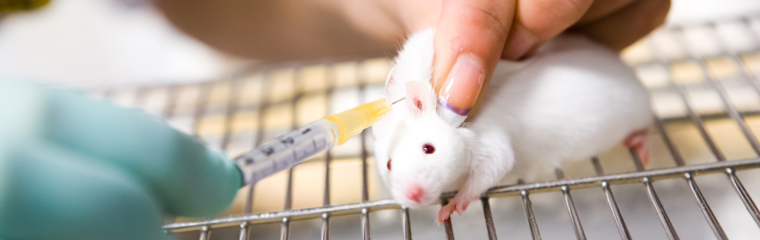
The specific issue we wish to raise is the use of animals used to develop and test new pharmaceutical products intended for human use. We are aware that the use of animals is currently a legal requirement, based on national and international regulations. These regulatory requirements can be traced back to the Doctors’ Trial at Nuremberg at the end of the Second World War, 1946 (1).
Science has moved forward since then by 75 years, but the laws have not yet caught up with the science. The result of this legal inertia is a continued reliance on outdated and unreliable animal testing, which can be summed up in the following paragraph:
“In 2004, the FDA estimated that 92 percent of drugs that pass preclinical tests, including “pivotal” animal tests, fail to proceed to the market. More recent analysis suggests that, despite efforts to improve the predictability of animal testing, the failure rate has actually increased and is now closer to 96 percent. The main causes of failure are lack of effectiveness and safety problems that were not predicted by animal tests”(2).
In addition, “Over the recent years, there has been an increasing recognition of the weaknesses that pervade our current system of basic and preclinical research. This has been highlighted empirically in preclinical research by the inability to replicate the majority of findings presented in high-profile journals. The estimates for irreproducibility based on these empirical observations range from 75% to 90%. These estimates fit remarkably well with estimates of 85% for the proportion of biomedical research that is wasted at large”. (3)
In view of this embarrassing state of affairs, several attempts have been made by research teams to improve the quality of animal studies, including the updated ARRIVE guidelines (Animal Research: Reporting of In Vivo Experiments) (4). These attempts to improve the methodology of animal studies betray a remarkable ignorance of complexity science and evolutionary biology. No matter how good the methodology, animal models cannot predict human outcome with respect to drug development and disease, as demonstrated above and further explained in the following references. (5,6,7)
Not only is the continued use of animals responsible for an enormous amount of avoidable animal suffering but it is also responsible for a significant incidence of human adverse drug reactions (8). This is not surprising in view of our current knowledge of inter and even intra-species differences, based on genomics, complexity theory and evolutionary biology (9).
The following paragraph makes the connection between animal testing and shareholder expectations:
“Pharmaceutical firms seek to fulfil their responsibilities to stakeholders by developing drugs that treat diseases. We evaluate the social and financial costs of developing new drugs relative to the realized benefits and find the industry falls short of its potential. This is primarily due to legislation-mandated reliance on animal test results in early stages of the drug development process, leading to a mere 10 percent success rate for new drugs entering human clinical trials. We cite hundreds of biomedical studies from journals including Nature, Science, and the Journal of the American Medical Association to show animal modelling is ineffective, misleading to scientists, unable to prevent the development of dangerous drugs, and prone to prevent the development of useful drugs.” (10).
The pharmaceutical industry is best placed to make the paradigm change needed to replace outdated and unreliable animal tests with human relevant test methods, including human 3D cell culture, organs on chips, pharmacogenomics, and similar 21st century technologies that were previously unavailable.
Only the pharmaceutical industry has the resources to scientifically validate human based test methods and steer them through the regulatory framework.
We would argue that the only reason that animal testing has evaded the rigors of evidence based science for so long is that the public and indeed, shareholders, are completely unaware of the fact that currently available human based test methods are far more predictive of human outcome than animal tests.
We can choose between the use of human data that is relevant and reliable for human medicine, or the use of animal data that is clearly irrelevant and unreliable for human medicine. The scientific evidence against animal testing is now overwhelming. What is now required is a political will on the part of the pharmaceutical industry to make change happen, in consultation with regulatory agencies and the International Conference on Harmonization (ICH).
The development, manufacture and mass marketing of the COVID-19 vaccine was achieved in just 10 months instead of the normal 10 to 15 years. The pharmaceutical industry has already had 75 years in which to replace animal tests. Now is the time to invest some of the profits made from the COVID-19 vaccine and to replace animal tests with human based methodologies that are currently available. This is an excellent opportunity for the Wellcome Trust to take the lead on this crucial issue by being proactive.
We are sure you will agree that this would represent a win-win situation for the Wellcome Trust, for human health and for animal welfare.
We look forward to hearing from you.
Yours sincerely,
Dr Andre Menache BSc(Hons) BVSc Dip ECAWBM (AWSEL) MRCVS
Patrons: Rev. Christa Blanke, Rabbi Prof. Dan Cohn-Sherbok, Kay, Duchess of Hamilton, Joyce D’Silva, Faizan Jaleel, Satish Kumar, Nitin Mehta MBE, Fr Simon Nellist, Dr Alpesh Patel, Dr Matthieu Ricard, Anant Shah OBE, Ajit Singh MBE, Charanjit Singh, Mohammad Safa, Dr Will Tuttle, Rabbi Jonathan Wittenberg.
On the 14th of November 2021 at 3pm, I attended a service held on behalf of the animals who have died in human conflicts and suffered at the hands of humankind. The service was organized by the Anglican Society for the Welfare of Animals (ASWA), and I was there representing the Animal Interfaith Alliance. The Reverend Dr Helen Hall led the service. After the Introduction and welcome, the audience and participants sang the hymn ‘O God, our help in ages past’.
I then gave the Old Testament Reading from Isaiah 2:3-4 (NRSVA): 3 Many peoples shall come and say, ‘Come, let us go up to the mountain of the Lord, to the house of the God of Jacob; that he may teach us his ways and that we may walk in his paths.’ For out of Zion shall go forth instruction, and the word of the Lord from Jerusalem. 4 He shall judge between the nations and shall arbitrate for many peoples; they shall beat their swords into ploughshares, and their spears into pruning-hooks; nation shall not lift up sword against nation, neither shall they learn war anymore.
This was followed by a reflective reading from the Reverend Samantha Chandler:
‘JUST A DOG’
From time to time, people tell me “lighten up, it’s just a dog” or “that’s a lot of money for “just a dog”. They don’t understand the distance travelled, the time spent, or the cost involved for “just a dog”. Some of my proudest moments have come about with “just a dog”. Many hours have passed, and my only company was “just a dog” but I did not once feel slighted. Some of my saddest moments have been brought about by “just a dog”, and in those days of darkness, the gentle touch of “just a dog” gave me comfort and reason to overcome the day. If you too, think it’s “just a dog”, then you probably understand phrases like “just a friend”, “just a sunrise”, or “just a promise”. “Just a dog” brings into my life the very essence of friendship, trust, and pure unbridled joy. “Just a dog” brings out the compassion and patience that makes me a better person. Because of “just a dog” I will rise early, take long walks and look longingly to the future. So, for me and folks like me, it’s not “just a dog” but an embodiment of all the hopes and dreams of the future, the fond memories of the past, and the pure joy of the moment. “Just a dog” brings out what’s good in me and diverts my thoughts away from myself and the worries of the day. I hope that someday they can understand that it’s not “just a dog” but the creature that gives me humanity and keeps me from being “just a man” or “just a woman”. So, the next time you hear the phrase “just a dog”, just smile, because they “just don’t understand”. (Unknown Author)
The service continued with Intercessions by the Reverend Professor Martin Henig, who spoke on behalf of the animals who had died in human conflicts but also those who had suffered and died at the hands of cruel people or practices. He also gave thanks for the safety of the animals and people who were brought out safely from Afghanistan by Pen Farthing, and thanks too, for the people and animals in our armed and civil forces, and many others who keep us safe.
This was followed by ‘A Time to Reflect’ by Revered Dr Helen Hall, which led to the ‘Introduction to the Act of Remembrance’ and a ‘Two Minute Silence’, followed by the quote:
‘They shall not grow old as we that are left grow old; Age shall not weary them. At the going down of the sun and in the morning We will remember them.’
To which the congregation responded:
‘We will remember them.’
The Laying of the Wreaths on the Memorial was followed by a blessing of the audience and the Hymn ‘Just As I Am’ and the ‘Dismissal’.
Finally, the people gathered to look at the many wreaths placed against the Animals At War Memorial, whereupon we all departed. It was a very moving and beautiful service, and I was honoured to represent the Animal Interfaith Alliance on this occasion.
We are delighted to announce that Lisa Levinson and Judy Carman of AIA’s US partner organisation, the Interfaith Vegan Coalition (IVC) will be giving an online presentation on Sunday 21st November 2021 at 17.45 GMT, following AIA’s online AGM.
Lisa and Judy will be talking about ‘Vegan Spirituality: the Climate Solution’ and IVC’s inspirational work to promote vegan spirituality. Solving the environmental crisis that we now face requires internal spiritual change, where we learn to live in harmony with creation and to respect it, rather than seeing it as a resource to be exploited. Technological solutions alone are not enough.
Lisa Levinson
Judy Carman
Lisa Levinson manages In Defense of Animals’ campaigns and directs the Sustainable Activism Campaign, offering emotional and spiritual resources for animal activists. Lisa founded Vegan Spirituality to explore veganism as a spiritual practice and co-founded the Interfaith Vegan Coalition, which provides resources for faith-based vegan advocacy. She started the National Goose Protection Coalition to prevent goose roundups and the Toad Detour to help toads migrate safely. She also co-founded Public Eye: Artists for Animals to teach compassion for animals through the arts.
We are delighted to announce that Lisa Levinson and Judy Carman of AIA’s partner organisation in the US, the Interfaith Vegan Coalition (IVC) will be giving an online presentation on Sunday 21st November 2021, following AIA’s online AGM.
Lisa and Judy will be talking about ‘Vegan Spirituality: the Climate Solution’ and IVC’s inspirational work to promote vegan spirituality.
The AGM will be held online at 16.00 GMT and will include an address by AIA’s president, Dr Richard Ryder. The AGM will be for AIA members only and we’d be delighted if all members can attend.
The Presentation by Lisa and Judy will be open to all and will commence at 17.45 GMT. Please join us. Everyone is welcome!
To register and receive the Zoom link to the presentation and/or the AGM, please email barbgard.aia@gmail.com
The Animal Interfaith Alliance (AIA) has written an open letter to 24 overseas embassies in the UK on behalf of its Director, Dr Andre Menache, calling on a global ban on biohazard research. The open letter is below.
Dear Ambassador,
Open Letter Calling for a Global Ban on Biohazard Research
We, the Animal Interfaith Alliance, a group of 17 faith-based animal advocacy organisations (listed below), write to you in your capacity as Ambassador to the UK, to request your help in calling for a global ban on biohazard research.
We refer here specifically to the genetic manipulation of animal viruses and other biological agents. Of particular concern are the three thousand biosafety level 3 and 59 biosafety level 4 facilities, worldwide.1
As far as we are aware, no laboratory has yet signed up to the voluntary biorisk management system (ISO 35001), introduced in 2019 to establish management processes to reduce biosafety and biosecurity risks.2
In addition, no facility, not even the highest biosafety level 4, is immune to accidents, as illustrated by the outbreak of foot-and-mouth disease at the Pirbright Institute in the UK in 2007.3
Currently, we are faced with the COVID pandemic, which could be the result of so-called ‘gain of function’ research, which has generated much controversy and even a moratorium from 2014 to 2017 in the U.S. This high-risk research aims to create mutations in pathogens (especially animal viruses) to make them more contagious or lethal to the human population. This ‘gain of function’ endows them with abilities they do not have in nature.4
In view of the above, we wish to invoke the precautionary principle by calling for a global ban on biohazard research. The health and wellbeing of future generations depend on your determination to act decisively to achieve this ban. Please will you confirm to us your commitment to a ban. We thank you for your consideration.
Respectfully yours,
Dr Andre Menache BSc(Hons) BVSc Dip ECAWBM (AWSEL) MRCVS
The Animal Interfaith Allianceand all of its faith-based members join and support our member organisation, Catholic Concern for Animals (CCA) in paying tribute to their Patron, Sir David Amess, who was murdered on Friday 15th October.
Sir David was a devout Catholic and an active advocate for animal rights in Parliament. In 2015 he met with Pope Francis. He was a great supporter of CCA and regularly contributed to their magazine The Ark.
Most of all, he was a wonderful human being.
The trustees of CCA said: “Trustees, officers, and members of Catholic Concern for Animals are saddened and shocked at the news of the death of CCA Patron Sir David Amess. Sir David was a forthright advocate of animal rights in Parliament, and a faithful and devoted supporter of Catholic Concern for Animals.
“The tragedy of his untimely and violent death, whilst seeking to assist members of his constituency, will leave an enormous void in support for animal rights in Parliament, and a hole in the heart of our Charity.
“His service as a Patron of the Charity since 2014 has been invaluable and his presence will be irreplaceable.”
AIA Board member and Founder and Chair of Panorthodox Concern for Animals, Dr Christina Nellist, has just launched her two new books, published by Cambridge Scholars Publishing.
The books are Climate Crisis and Sustainable Creaturely Care: Integrated Theology, Governance and Justice and Climate Crisis and Creation Care: Historical Perspectives, Ecological Integrity and Justice.
Both books are being added to the BA (Hons) course ‘Animals and Society’ at Winchester University, UK.
The books consist of many scholarly contributions which Christina has edited and complied. Chapter 1 of Climate Crisis and Sustainable Creaturely Care, was written by members of AIA, and is titled “The Animal Interfaith Alliance’s Vision for the Place of Animals in a Sustainable World”. It is introduced by AIA’s President, Dr Richard Ryder and the conclusion has been drawn up by AIA CE, Barbara Gardner. There is a contribution from each of the main faiths, including the Jain and Hindu perspectives by Nitin Mehta MBE, the Buddhist perspective by Dr Will Tuttle, the Jewish perspective by Prof. Dan Cohn-Sherbok, the Eastern Orthodox perspective by Dr Christina Nellist, the Catholic perspective by Dr Deborah Jones, the Anglican perspective by Rev. Prof. Fr Martin Henig, the Unitarian Universalist perspective by Rev. Feargus O’Connor, the Islamic perspective by Faizan Jalil, and the Sikh perspective by Charanjit AjitSingh.
This volume encapsulates the thoughts and research of academics across the globe in regards to the biggest crisis of our generation: climate change. Considering the global crisis though the lens of creation care, this volume reviews the damage we have done to our environment and how our misuse of resources threatens all forms of life on earth via food insecurity, rising sea levels, mass migration and social unrest. This book presents a global voice on our historical impact on the world, the governance that allowed it and how creation care can present a way out of this crisis.
The book, Climate Crisis and Sustainable Creaturely Care, can be purchased here.
The other book, Climate Crisis and Creation Care, can be purchased here.
A new exposé has just gone live as an exclusive at the top of the Daily Mirror’s website.
This, coupled with a 90-97% failure rate for drugs and topical medicines is why we support the ban of the animal-testing mode.
Please help them by writing to your MPs, asking them to support the EDM 175 in Parliament which is calling for a public scientific hearing on animal experiments – for independent scrutiny from independent scientists – on the animal-testing model.
Please share – for this will only change if Parliament stops repeating the outdated responses of the past and starts looking at the new science and the new evidence.