AIA Warmly Welcomes the Government’s New Strategy to Replace Animal Testing with Human-Relevant Test Methods

The Animal Interfaith Alliance (AIA) warmly welcomes the Government’s new strategy, “Replacing Animals in Science: A strategy to support the development, validation and uptake of alternative methodswhich AIA has been campaigning onsince its inception ten years ago.

The strategy’s vision is “for a world where the use of animals in research and development is eliminated in all but exceptional circumstances, achieved by creating a research and innovation system that replaces animals with alternative methods wherever possible”.

We celebrate the fact that the government has at last recognised that the animal testing model is out-dated and that non-animal research methods are the way forward. 

With the recent advancement of human-relevant test methods, the Government recognises the opportunities for replacing animal experiments. It also recognises that it must create the environment to encourage this.  The strategy seeks to implement this environment.

The strategy has six objectives:

  1. Accelerate the replacement of animals in science to phase out their use.
  2. Achieve equal or better research and testing outcomes using alternative methods.
  3. Drive private investment in alternative methods to boost innovation and growth.
  4. Improve regulatory confidence and acceptance of alternative methods.
  5. Create infrastructure and partnerships to unlock value from UK data.
  6. Position the UK as a global leader in alternative methods.

The strategy divides animal experiments into three baskets, those where alternatives already exist and can be replaced immediately, with many planned to be phased out by 2026, those where alternatives are being developed, which will take a little longer, and those which currently have no alternatives, but where these should be developed.

AIA has been campaigning to replace animal testing with human-relevant test methods for over ten years, so we are delighted to, at last, see a serious strategy to achieve this.  The strategy’s targets for ending animal testing are ambitious.  However, we will be vigilant in overseeing the achievement of those targets.  Whilst this is a significant step, we must ensure that progress is timely and that specific issues within the Government’s report be examined and worked through. Our scientific expert, Dr Andre Menache has written a review outlining some of the potential issues within the report, which can be read here. Through our political representative and continued consultation and campaigning, we aim to keep the pressure on the government to address the potential problems to ensure genuine and timely progress.


AIA Founder receives MBE for Services to Animal Welfare

On Wednesday 12th November 2025, AIA Founder and CE, Barbara Gardner received an MBE from King Charles at Windsor Castle.

The award was given for Services to Animal Welfare, for Barbara’s voluntary roles as Treasurer of the RSPCA and Founder of the Animal Interfaith Alliance.

Barbara said “I’m so pleased that animal welfare has been recognised by the awards system, and I’m deeply honoured to be a recipient of such a prestigious award. It means an awful lot to me. This will help us to work for animal protection at the highest levels”.


Remembering Dr Jane Goodall

Everyone at the Animal Interfaith Alliance is deeply saddened by the passing of Dr Jane Goodall. She was a beacon of hope and an inspiration to us all. She leaves an amazing legacy which will continue to inspire us for many years to come.

Please join AIA member organisation, Compassion Consortium in a sacred sendoff for Jane Goodall.

Compassion Consortium co-founders Reverend William Melton and Victoria Moran, Animal Chaplain Jen Baker, and the entire Compassion Consortium team invite you to join us for this no-charge special event:


A SACRED SENDOFF FOR JANE GOODALL
SATURDAY OCTOBER 4 on ZOOM
6:30 PM ET / 5:30 PM CT / 4:30 PM MT / 3:30 PM PT

While October 4 will be celebrated around the world as World Animal Day and the Feast of St. Francis, and myriad animal blessings will be held, Compassion Consortium will gather to share the blessings Jane Goodall brought into our lives and into the lives of the animals we care so deeply for and about.

Register at https://www.compassionconsortium.org/jane


Letter to Pope Leo XIV regarding the updating of the teachings on human-animal relations

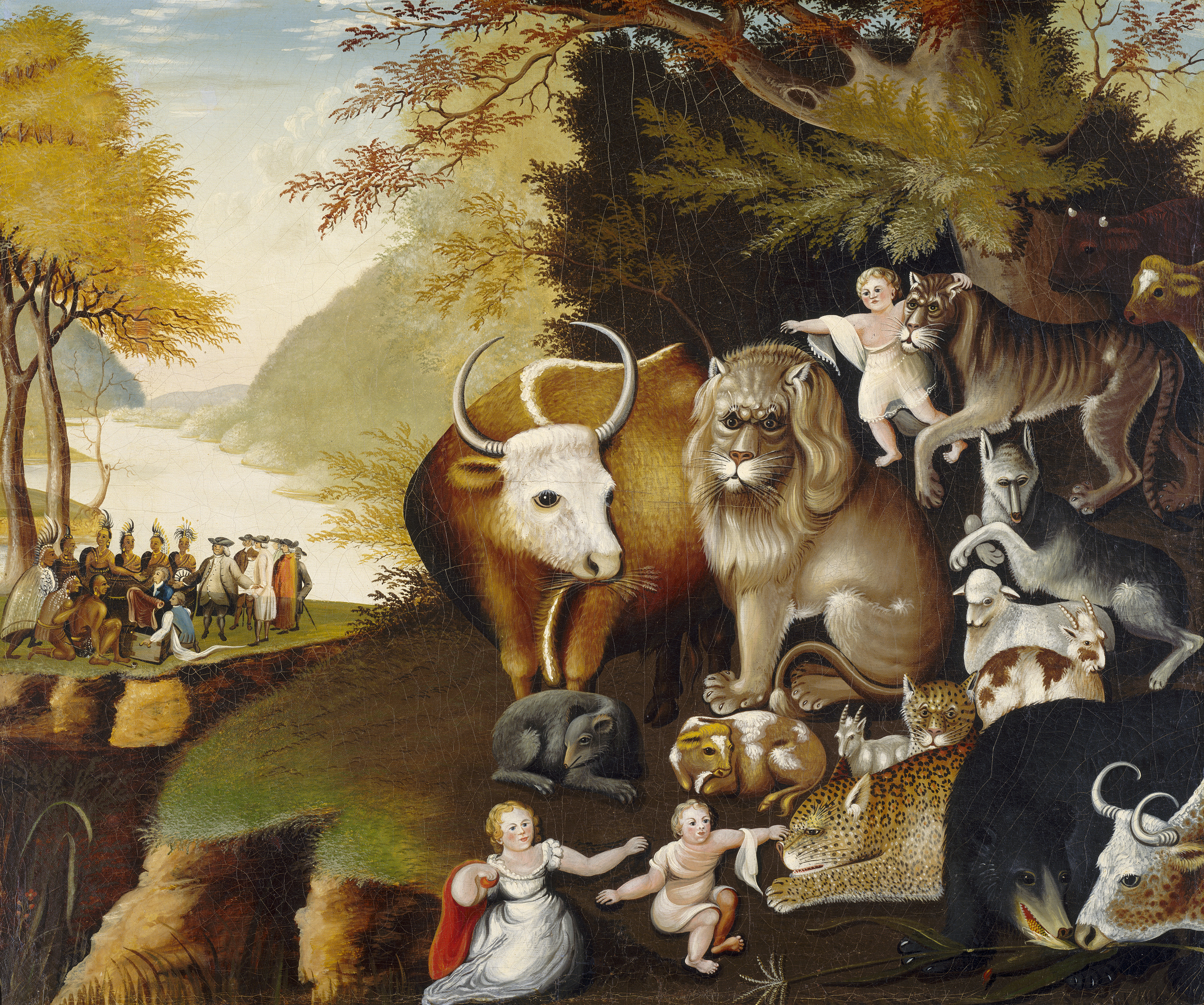
Edward Hicks (American, 1780-1849 ), “Peaceable Kingdom,” 1834. Oil on canvas, 29-5/8 x 35-1/2 in. National Gallery of Art, Washington, DC, USA. https://en.wikipedia.org/wiki/Edward_Hicks#/media/File:Edward_Hicks_-_Peaceable_Kingdom.jpg
Request for signatures

CHRISTIAN ANIMAL ADVOCACY AND PROTECTION ORGANIZATIONS SIGN LETTER TO POPE LEO XIV URGING AN OVERDUE UPDATE TO THE CHURCH’S TEACHING ON HUMAN–ANIMAL RELATIONS

VATICAN CITY (October 1st, 2025) — Christian animal advocacy and protection organizations have written to Pope Leo XIV asking him to initiate work on the theological and doctrinal renewal of the principles governing the relationship between humans and animals, and on new social teaching of the Church in this regard. 

This highly important request urges the Pope to take into account current knowledge about animal sentiency, growing animal suffering in industrial agriculture, and the detrimental outcomes to mankind, the animals, and the planet which will continue including climate changes, pollution of the planet, and world hunger if theological and doctrinal renewal does not take place.

The signatories believe that a compassionate teaching on human–animal relationships, rooted in Scripture and Tradition, and updated according to present scientific knowledge is urgently needed to address widespread cruelty, environmental degradation, and climate crisis. That is why they request the Pope to establish a commission of theologians, ethicists, scientists, and other relevant experts to develop a teaching underlying the intrinsic value of all animals as God’s creatures and calling the faithful to eliminate cruelty, exploitation, and indifference to their suffering.

The letter states:

“We earnestly appeal to Your Holiness to open in the Church a new chapter of moral reflection and teaching that will include animals within the circle of compassion and justice. Just as the Church has played an important role in advancing environmental protection, now it has a chance to lead in healing our relationship with animals. “The whole of creation waits with eager longing for the children of God to be revealed” (Romans 8:19).”

“We respectfully request that Your Holiness establish a commission of theologians, ethicists, scientists, and other relevant experts to explore this issue in depth and to develop updated Catholic teaching on human–animal relationships that reflects contemporary scientific knowledge and will help shape people into the image of a loving and compassionate God.”

Read the complete letter and signatory list here. The letter is also available in French, Spanish, German, Italian and Polish.

English: https://chng.it/cgtZNBqNTX

Français: https://chng.it/DKMWpQ9GJ5

Polski: https://chng.it/jkcQ8QSrZk

Deutsch: https://chng.it/F7HgZP7mQ7

Italiano: https://chng.it/j2gXwNPjrB

Español:  https://chng.it/mHNzL88r5Z

Signatories:

All Creatures.org (USA) – Tams Nicholson, Executive Director    https://www.all-creatures.org/

AnimaTerra -Prendre soin de la Terre et du Vivant –  Christine Kristof    www.animaterra.fr

Catholic Action for Animals and St. Barnabas Laudato Si’ Group (UK) – Virginia Bell ; Virginia Bell vrbell18@yahoo.co.uk ; https://catholicactionforanimals.wordpress.com/

Catholic Vegetarians (Italy) – Marilena Bogazzi, President  cattolici.vegetariani@gmail.com ;  www.cattolicivegetariani.it

Christian Animal Rights Association (USA) – Matthew A. King, President info@christiananimalrights.com   https://christiananimalrights.com/

Christian Vegetarian Association (USA) – Stephen R. Kaufman, MD, Chair  https://www.christianveg.org/

Christians for Animals (Poland) – Barbara Niedźwiedzka, PhD chrzescijaniedlazwierzat@gmail.com  www.opowiedzwierze.pl f. https://www.facebook.com/ChrzescijanieZwierzeta

ChristInnen für Tiere (Germany) – Gabriella Perotto,  gabriperotto@hotmail.com

Fraternité pour le Respect Animal (France) – Estela Torres estelatorres@fra-respect-animal.org www. https://fra-respect-animal.org/

Jesuit European Social Centre (JESC) – Colm Fahy, Ecology Advocacy Officer  https://www.jcfj.ie/

Pan-Orthodox Concern for Animals – President dr Christina Nellist, panorthodoxconcernforanimals@gmail.com  https://panorthodoxconcernforanimals.org/

Vegan Catholic Christian – Daniel Mascarenhas, S.J.  vegancatholic.org ; dmascarenhassj@thejesuitpost.org

The list is still open for Christian faith based organisations to sign.

Contact:

Barbara Niedzwiedzka.

Christians for Animals – Poland

chrzescijaniedlazwierzat@gmail.com

World Day of Prayer for the Care of Creation

Image by Javier Miranda on Unsplash

Today, 1st September, is the World Day of Prayer for the Care of Creation or “Creation Day”.

It was originally celebrated by the ancient Orthodox Church from the 5th century, as a day to praise God as the Creator, to commemorate the mystery of Creation in Christ and to inspire Christians to care for the created world.

In 2015 Pope Francis extended the celebration to Catholics when he published his encyclical letter Laudato Si’: On Care for Our Common Home, saying that prayer for Creation is “now more urgent than ever”. He wished the celebration to be extended to 4th October, the feast of St Francis of Assisi.

This year Pope Leo XIV’s September prayer intention is for “Our Relationship with All of Creation”. It says: “Let us pray that, inspired by Saint Francis, we might experience our interdependence with all creatures who are loved by God and worthy of love and respect.”


Lobbying the UK Govt to Replace Animal Testing – 2025

Peter Egan Interview with Dr Andre Menache on Animal Testing

On 17 May 2025, AIA Chair Dr Andre Menache wrote to Wes Streeting MP, Secretary of State for Health and Social Care, concerning the policies of the Medicines and Healthcare Products Regulatory Agency (MHRA). The letter is reproduced below. A response was received from the MHRA’s Interim Executive Director of Innovation and Compliance, Mr James Pound on 11 June 2025, also reproduced below.

Our view is that the MRHA’s response is unsatisfactory. A different approach needs to be found for meaningful change to happen. One approach is to find a way to put political pressure on the MHRA to fulfil its mission of providing safe and effective drugs to the public using the best available science, which is currently not the case. The Q&A video (above) by Peter Egan provides some pointers. Here is the link to the article quoted in the video. Although the author does not advocate the immediate end to all animal testing, the following sentence is key: “A case example—drug-induced liver injury (DILI)—is examined to highlight where new approach methodologies (NAMs) can offer immediate gains in safety prediction.” 


AIA Letter to Wes Streeting MP

Subject: Replacing animal tests with 21st century technology

Date: 17 May 2025

Dear Wes Streeting MP,

I am contacting you on behalf of the faith-based group, Animal Interfaith Alliance, in your role as Secretary of State for Health and Social Care and the role of your Department in overseeing the activities and policies of the Medicines and Healthcare Products Regulatory Agency (MHRA), currently chaired by Professor Anthony Harnden.

The UK government recently announced a £400 million public-private collaboration to kickstart economic growth and build an NHS fit for the future.

It seems ironic to invest £400 million to support faster patient access to cutting-edge treatments, while continuing to allow the pharmaceutical industry to use completely out of date and unreliable animal tests as the backbone of preclinical studies.

According to the US Food and Drug Administration (FDA), out of ten drugs that successfully pass animal tests, nine will fail during clinical trials, either as a result of adverse reactions not seen in the animals or else due to lack of efficacy in humans. No other comparable industry would tolerate such a failure rate and yet the Government and the MHRA continue to accept animal testing as the « gold standard » despite the availability of modern technologies that far surpass animal tests in terms of reliability and relevance to human health.

As one example, the human ‘liver on a chip’ is far more reliable than animal tests at detecting drug induced liver injury (DILI for short) of prescription drugs. This is hugely significant because the ‘liver on a chip’ will prevent dangerous drugs from ever reaching clinical trials, whereas animal testing is notoriously unreliable at detecting and predicting DILI.   

Not only is DILI the leading cause of prescription drug withdrawal from the market, but such liver damage can result in a patient requiring a liver transplant. A single liver transplant will cost the NHS around £ 121 000. This represents a huge economic burden on the NHS, in addition to avoidable human suffering.

Clinical trials must no longer be linked to results obtained from animal tests in the 21st century. Human based test methods, such as « liver on a chip » should be incorporated into the preclinical test phase without delay. Anything less could constitute a dereliction of patient and consumer safety.

We ask the government to implement without delay these and similar human based test methods for the sake of good science, patient safety and animal welfare.

We would be honored if you could make the time to meet with an AIA scientific delegation to allow us to provide evidence based science to back our arguments.

Respectfully yours,

Dr Andre Menache BSc(Hons) BVSc Dip ECAWBM (AWSEL) MRCVS

Chairman Animal Interfaith Alliance (AIA)

cc: Chris Fegan, vice chairman

Barbara Gardner MBE, chief executive Animal Interfaith Alliance – Faiths Working Together for Animals (animal-interfaith-alliance.com)


Response from the MRHA

TROPHY HUNTING: WHAT THE EVIDENCE SAYS

By Dr Christina Nellist – Pan-Orthodox Concern for Animals

EVERY YEAR, TENS OF THOUSANDS OF WILD ANIMALS ARE KILLED BY TROPHY HUNTERS AROUND THE WORLD.

Threatened and internationally protected species, such as elephants, rhinos, lions, leopards, and bears, are amongst the most coveted targets.

Trophy hunting of threatened and internationally protected species, as well as the shipping of trophies to the hunter’s country of origin, is legal across many countries. While the US and EU are the largest importers, significant number of trophies are imported to the UK each year, including from threatened species.

There is evidence that trophy hunting is often unsustainable and can threaten the stability of populations and the survival of species, while also frequently failing to deliver claimed benefits for wildlife and local communities.

In response to repeated government commitments to ban hunting trophy imports into the UK, the trophy hunting industry is again actively lobbying policymakers and promoting arguments in favour of trophy hunting that does not stand up to scrutiny.

Trophy hunters pay to hunt and kill rare and threatened species.

The willingness to pay to kill a ‘trophy’ animal and retrieve body parts for display distinguishes trophy hunting from subsistence hunting or population management activities. Iconic and rare species are the most coveted targets.

Trophy hunters may pay very large sums to kill specific ‘target’ animals to obtain all or part of their remains, such as heads, tusk, horns, or skins, as trophies. Typically, the rarer the species, the more prized the trophy, increasing its symbolic and market value and making it more lucrative for hunting businesses. Although hunting packages often include several ‘lesser value’ target animals, such as antelopes or baboons, the industry is incentivised to encourage hunters to target threatened and protected species, such as elephants, lions, rhinos and leopards in Africa, brown bears in Europe, and polar bars in Canada.

Trophy hunting contributes to the decline of protected animals and undermines global conservation efforts.

Trophy hunting increases pressure on species that may already be negatively affected by habitat loss, wildlife trade and trafficking, climate change and other threats. It can also impact the genetic makeup of populations, disturb the dynamics of natural selection, and cause intense and avoidable animal suffering.

Many wildlife populations subject to trophy hunting are already in serious decline. Trophy hunting quotas are often set to maximise profits and are not based on scientific data, adding to the pressure on targeted species. Trophy hunters also typically target the animals that make the best trophies. These are often the largest and most impressive individuals who play key roles in their social groups and whose genetic heritage is important for the species’ future survival. Their removal is contrary to the dynamics of natural selection, weakens the gene pool, induces phenotypic (physical) changes, impacts reproduction and social behaviours, and may increase the likelihood of conflict with humans.

Trophy hunting fails to deliver claimed benefits for wildlife and communities.

Revenues from trophy hunting are typically too small to provide an effective and sustainable incentive for local communities to protect biodiversity, to prevent poaching, or to reduce human-wildlife conflict. The main beneficiaries of trophy hunting are governments, (mostly foreign) hunting tour operators, private landowners, and local elites. The proportion of revenue derived from trophy hunting that reaches local communities, or is used for conservation purposes, is, in many cases, very small. Trophy hunting typically maintains local people in a cycle of dependence, and can prevent the development of sustainable alternatives, such as ecotourism, which as the potential to provide more and better jobs and benefits for communities.

The legal trade in trophies facilitates the laundering of animal parts.

The legal trophy trade can stimulate demand for animal parts and provide opportunities for traffickers, fuelling corruption. The targeting of threatened and protected species for their body parts by trophy hunters can undermine global trade bans and efforts to curb poaching and trafficking, by providing opportunities for criminals to launder illegal wildlife products into trade. The use of hunting permits to facilitate the lucrative illegal trade in rhinoceros’ horn in Africa, Asia and Europe has been well documents. The activities of criminal networks and syndicates pose risks to security, livelihoods, social stability, local economies, and the rule of law.

An overwhelming majority of UK citizens oppose trophy hunting and support a ban on trophy imports.

Current UK legislation allows the import and export of hunting trophies from species that are otherwise protected under UK and international law and are not allowed to be traded under other circumstances due to concern for their conservation status.

A significant  majority of UK citizens surveyed oppose trophy hunting and support a ban on trophy imports. Acknowledging this growing societal opposition, successive UK government shave committed to introduce measures to ban or restrict hunting trophy imports, while several major players in the transportation sector have committed to cease transporting hunting trophies. The Labour Party’s 2023 election manifest included a commitment to ban the import of hunting trophies.

RECOMMENDATIONS

We call on the UK government to ban the import and export of hunting trophies to and from the UK.

A ban on the import and export of trophies is crucial to reduce the pressure on biodiversity, prevent avoidable animal suffering, and encourage alternative income streams for local communities in countries where trophy hunting takes place. It would also bring the UK into line with the increasing number of European countries taking action.

POCA, along with other groups such as Born Free, Four Paws and Humane World for Animals, who organised this week’s events in Parliament, have long advocated for the end of ‘sport’ or ‘recreational’ hunting and campaigned with others for the ban on the importation of so-called ‘trophies’.

Left – Dr Christina Nellist, President of Pan Orthodox Concern for Animals Charity, and Board Member of the Animal Interfaith Alliance (AIA).

Middle – Baroness Hayman of Ullock, Parliamentary Under-Secretary of State at the Department for Environment, Food and Rural Affairs (DEFRA), and Minister for Animal Welfare in the House of Lords.

Right – Chris Fegan, Chief Executive at Catholic Concern for Animals and Deputy Chair of AIA.

Last time a bill on this came before Parliament, we had cross-party agreement to make it happen and we were also there at that time:

Dr Nellist (POCA) with Peter Egan, Actor and Animal Activist.

Dr Nellist (POCA;AIA), Eduardo Gonzales (Journalist; Animal Campaigner) ; Judith Wilson (AIA)

Unfortunately, a few terrible  men used an old parliamentary technique called Filibustering ( a political procedure in which one or more members of a legislative body prolong debate on proposed legislation so as to delay or entirely prevent a decision.) This obstruction prevented the last attempt to ban the importation of trophies from becoming law.

This time we must ensure this does not happen #GetTheBanDone.